DESIGN EXECUTIVE · DALLAS-FORT WORTH
AI Driven - Human Centered - Design Leadership
in Complex Industries
I partner with executive teams to scale design organizations, build AI strategies, embed research into product strategy, and deliver measurable outcomes from startup to enterprise.
40+
Team Members Led
85%
User Satisfaction Ratings
43%
In Support Reduction Times
10+
Years in Enterprise UX

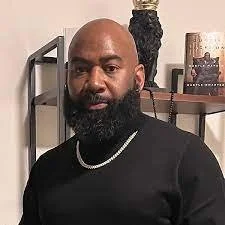
Hi, I’m Joey
a design executive who builds the organizational infrastructure behind great products.
Over the past decade I've led 40+ person design and research teams through the kinds of challenges most orgs don't talk about publicly: Agile transformations mid-flight, CRM overhauls with no playbook, and design practices being asked to prove their ROI to skeptical stakeholders. I've done that work in financial services, healthcare, and enterprise B2B — and I've done it with consistent results.
What I bring isn't just experience shipping products. It's the ability to look at how a design organization is structured, identify where it's leaking value, and help rebuild it in a way that earns trust up, down, and across the org chart. I think in systems: design systems, team systems, and the feedback loops between product, research, and business strategy.
Based in Dallas-Fort Worth, I've spent my career in a market where UX maturity is still being built — which means I know how to make design indispensable in environments that aren't already converted.
Welcome to my portfolio,
How did you get into this field?
I found user experience during my thesis work at UT Southwestern creating e-learning modules for medical students, who were forced to learn thousands of pages of books in a series of back to back classes aptly deemed “Blocktober“. Students were unable to digest such large amounts of information, and it resulted in cognitive and social issues. I worked with the neuroscience department to minimize the content of one such class, using consistent imagery and creating a simple interface to help decrease cognitive load. The research results were amazing! Students loved it, the professors loved it, and I’ve had the passion to provide more of those experiences ever since.
FEATURED CASE STUDY
Fintech · Enterprise B2B · 2023
Building Design Maturity Inside an Agile Transformation
How I structured and led a 5-team UX org to embed design as a strategic function during a company-wide CRM migration — from vendor selection through product release.
Client
Confidential
Duration
6 months · 2 Full PI cycles
My role
Design & Research Director
Scope
Org design, research leadership, CRM migration
THE SITUATION
A company mid-transformation with no design infrastructure to support it
The client — a financial advisory firm serving military families across enlistment, retirement, and estate planning — had outgrown its Microsoft Dynamics CRM. Years of customization had made the platform impossible to upgrade. A full vendor analysis pointed to Salesforce, and the company committed to a complete migration.
What made this engagement complex wasn't the technology. The company had just completed its first PI of Agile adoption and had a UX team of four. They needed a design and research organization built around a migration of this scale, fast. My mandate was to build that org, define how it would operate inside an Agile delivery model, and deliver a successful Salesforce CRM MVP.
“The real work wasn’t designing screens. It was designing the team structure, the research cadence, and the operating model that would make design indispensable — not just for this project, but permanently.”
ORG DESIGN
Structuring five parallel UX teams around the business
Given the breadth of the migration — spanning five distinct user groups across the business — I designed a matrix team structure organized by persona type rather than by product feature. This ensured each team developed deep domain knowledge while maintaining a unified research practice across all five service areas.
Each team was staffed with a senior researcher, a junior researcher, and a designer, with a team lead responsible for rolling up results to product managers and presenting to the C-suite. I established the reporting structures, defined delivery cadences, and set the standard for how UX evidence was presented at the executive level.
Office Staff
Internal operations and administrative user needs
Advisors
Primary client-facing service delivery team
Management
Oversight, reporting, and portfolio visibility
Background Systems
Integrations, data flows, and infra-adjacent UX
Client
End-user experience across the full service lifecycle
RESEARCH & DELIVERY APPROACH
Three phases across the full product lifecycle
Rather than treating UX as a design-and-handoff function, I structured research to run continuously across the migration lifecycle — with each phase feeding directly into the next delivery cycle and informing executive decision-making at every PI boundary.
-
Discovery40 stakeholder and end-user interviews across all five business groups in 4 weeks. The backlog was built from this research — not from sales requests or vendor assumptions. Teams were embedded into each service area to continue domain-specific discovery.
-
Iteration & development
150+ interviews and usability tests run across 2-week design sprints. RITE studies validated prototypes before each development handoff. Quarterly sentiment surveys tracked CRM adoption across the organization pre- and post-release.
-
Validation & Rollout
Assign the change champion groups identified from each business area to beta-test and refine the product. Beta sentiment reached 4.2/5 before full release. UX teams prioritized refinements by business value, not by volume of feedback.
Design delivery was scoped into two categories from the outset: Business Critical Functions constituting the MVP, and Future Enhancements ranked by business value. This distinction was established with C-suite stakeholders during kickoff workshops — ensuring alignment on scope before a single prototype was built.
OUTCOMES
Design embedded as a permanent function — not a project resource
The four outcomes below reflect both product delivery success and organizational transformation. The latter is what I consider the more significant result: by the end of the engagement, the internal UX team was self-sufficient, trusted by the C-suite, and operating as a permanent function within the Agile delivery model.
85%
User satisfaction
After an expected post-launch dip, satisfaction recovered to 85% within 6 months as broken workflows were resolved and UX improvements were shipped continuously.
43%
Support case reduction
CRM-related support cases dropped 43% within 6 months of launch as research-informed design decisions eliminated the highest-friction workflows.
+15%
NPS growth
Enterprise Net Promoter Score grew nearly 15% in the 6 months following launch, reflecting improved confidence in the platform across the organization.
STRATEGIC CHALLENGES & HOW WE SOLVED THEM
Four obstacles that required executive-level problem solving
Each of these challenges required decisions that went beyond UX practice — they required influencing org structure, stakeholder relationships, and delivery strategy at the leadership level.
-
Rather than working around a design-skeptical culture, I built a maturity program into the engagement itself — coaching internal staff, advocating for customer-centricity at the executive level, and establishing the standards that the internal team now owns independently.
-
With only one PI of Agile under the company's belt, there was no established model for how UX operated within the methodology. I defined that model — embedding researchers into product service trains and establishing the research-to-delivery cadence that persisted beyond the project.
-
Rather than ceding design authority to the implementation vendor, I positioned UX as the translation layer between stakeholder mental models and Salesforce capabilities — separating what the platform could do from what the business assumed it would do.
-
When business-critical UX functions were handed back to the internal team mid-project, I absorbed the scope, reprioritized the backlog, shifted delivery by one PI, and redefined MVP success criteria — turning a potential gap into an opportunity to establish UX leadership credibility with the C-suite.
Work History
-
Director - User Experience & Product
Oct 2022 - Present
Develop the product design and experience practice by serving as leader to both the domain and leadership teams nationally through practice meetings, meetups and company initiatives.
Served as global Product Design SME for Sogeti on engagements with other Capgemini subsidiaries to ensure collaboration in company vision.
Develop Experience & Product leadership plans for education and retention of consultants. Rebuilt the pursuit pitch models to streamline efforts for company sales within the practice.
Mentor across all levels of the company locally and nationally, from junior consultants to senior managers, to help build mutual vision and community.Develop the product design and experience practice by serving as leader to both the domain and leadership teams nationally through practice meetings, meetups and company initiatives. Served as global Product Design SME for Sogeti on engagements with other Capgemini subsidiaries to ensure collaboration in company vision.
Develop Experience & Product leadership plans for education and retention of consultants. Rebuilt the pursuit pitch models to streamline efforts for company sales within the practice. Mentor across all levels of the company locally and nationally, from junior consultants to senior managers, to help build mutual vision and community.…see more
Senior Manager- Customer First
Oct 2019 - Oct 2022
Lead teams across 5 client regional engagements from product level to portfolio UX team efforts. Efforts include leading Salesforce implementations, product selections, company alignment & vision strategies as well as reimaging product & roadmaps. Have Driven over 10mil in sales of experience and innovation projects.
Develop the experience practice and leadership teams nationally through practice meetings, meetups and team vision initiatives.
Develop Experience & Product leadership plans for education and retention of consultants. Rebuilt the pursuit pitch models to streamline efforts for company sales within the practice.
Mentor across all levels of the company locally and nationally, from junior consultants to senior managers, to help build mutual vision and community.
Lead teams across 5 client regional engagements from product level to portfolio UX team efforts. Efforts include leading Salesforce implementations, product selections, company alignment & vision strategies as well as reimaging product & roadmaps.
Have Driven over 10mil in sales of experience and innovation projects. Develop the experience practice and leadership teams nationally through practice meetings, meetups and team vision initiatives.
Develop Experience & Product leadership plans for education and retention of consultants. Rebuilt the pursuit pitch models to streamline efforts for company sales within the practice.
Mentor across all levels of the company locally and nationally, from junior consultants to senior managers, to help build mutual vision and community.…see more
Manager - Experience & Innovation
Feb 2019 - Oct 2019
Created Southwest Airlines Pilots Associations overall user experience strategy, research design documentation, user interviews, and knowledge transfer to internal teams to inform 3 year roadmap for overall internal product strategy .
Lead team of consultants new to UX projects through a research design project to create outputs which were presented to the Board for approval of long-term project charter.
Created Southwest Airlines Pilots Associations overall user experience strategy, research design documentation, user interviews, and knowledge transfer to internal teams to inform 3 year roadmap for overall internal product strategy .
Lead team of consultants new to UX projects through a research design project to create outputs which were presented to the Board for approval of long-term project charter.…see more
-
Head of UX
10/2017-1/2019
Brought Design Thinking to a startup of product managers, UX designers, & developers. Provided the company with a design-first structure for building out new product offerings as the company shifted focus from engineering centric.
Assisted company in refining vision through stakeholder interviews, research, competitive analysis, customer experience maps, user story sessions, & alignment sessions.
Aided in the release of an enterprise level NPS survey system. Provided design, product and UX work for an international brokerage company with a single quarter turnaround with a limited team on the design phase of the project.
-
UX Manager
Jul 2016 - Sep 2017
Implemented a User Centered Design system utilizing Scrum & Design Sprints methodologies, which quadrupled the 6-9 person team’s project capacities and allowed them to become a cross-divisional resource on over 12 projects.
Led, organized and implemented research efforts for both divisional and cross-divisional initiatives. Built company’s first internal research cycle into existing product roadmap and release plan.
Utilized regional sales training sites for user research testing, increasing testing capacities by 5x, while also decreasing research costs YOY by over 60%.
Provided voice and tone, definitions and information architecture to both the product and corporate brand level.
Implemented a plan for handoff between UX, training and curriculum to allow production of materials during development.Implemented a User Centered Design system utilizing Scrum & Design Sprints methodologies, which quadrupled the 6-9 person team’s project capacities and allowed them to become a cross-divisional resource on over 12 projects.
Led, organized and implemented research efforts for both divisional and cross-divisional initiatives.
Built company’s first internal research cycle into existing product roadmap and release plan.
Utilized regional sales training sites for user research testing, increasing testing capacities by 5x, while also decreasing research costs YOY by over 60%.
Provided voice and tone, definitions and information architecture to both the product and corporate brand level. Implemented a plan for handoff between UX, training and curriculum to allow production of materials during development.
Senior UI/UX Designer
Feb 2015 - Jul 2016
Became the company’s first user experience designer eventually scaling to a team of 9 designers, developers, content specialists, information architects and researchers.
Created prototypes, wireframes, user flows, mockups, and interactions for current and future products. Worked with local, regional and international teams on implementation of designs, which included:
-Websites with sales reporting, e-commerce and user management tools
-Highly sophisticated design, layout, photo manipulation and yearbook publishing applications
-Mobile applications in image management, profile management, and sales rep CRMs
-Cloud integration/database services
Standardized, built and maintained company information on branding style guides, competitive analysis, user testing results, personas, marketing analytics, user flows and iconography across all applications within the division.
Became the company’s first user experience designer eventually scaling to a team of 9 designers, developers, content specialists, information architects and researchers.
Created prototypes, wireframes, user flows, mockups, and interactions for current and future products. Worked with local, regional and international teams on implementation of designs, which included:
-Websites with sales reporting, e-commerce and user management tools
-Highly sophisticated design, layout, photo manipulation and yearbook publishing applications
-Mobile applications in image management, profile management, and sales rep CRMs
-Cloud integration/database services Standardized, built and maintained company information on branding style guides, competitive analysis, user testing results, personas, marketing analytics, user flows and iconography across all applications within the division.
-
Produced over 30 web, mobile and software experiences, as well as branding and design materials for companies such as:
-Body Drop Fitness by Camp Gladiator (campgladiator.com) a hip-hop dance based fitness program
-Fons PR ( www.fonspr.com) a public relations company with clients such as Alamo Drafthouse, and Amazon
-Service 247 (www.service247.com) a private technologies and insurance company
-PeopleFun ( www.peoplefun.com ) builders of mobile video games
-Texas Nurse Practitioners (texasnp.org) association of nurse practitioners based in Austin, TX
-Illumidream / XM Tek (www.xmtek.net) software development and internet technologies services
Managed the production and experience of interactive neuroscience courses for the UT Southwestern Department of
Neuropathology into portable e-learning experiences, creating: interactive 3D models, 2D animations, illustrations and quizzes for medical students and residents.
Testimonials
-
![]()
Ryan Meinzer
Director of Engineering - Capital One
No matter what I say, it will be insufficient to express my admiration for Robert's skills as a designer and overall understanding of the nuances of User Interface Design.
His designs are clean, easy to use, and easy to understand despite being very dense with information. Robert spends his free time learning and expanding his knowledge keeping designs free and cutting edge.
I would gladly have Robert on any team I form or am part of in the future.
-
![]()
John Beauford
CTO - Doctors in Training
Jamie KokotRobert was a excellent contributor to our team in terms of UI design, and current design paradigms. He works quickly and does very good work. He was on the forefront of visual design paradigm and is a top quality illustrator. He will be a great asset to any design or illustration team.
-
![]()
D'Marcus Graves
UX Designer - First Command
I am honored to say that I worked with Robert at First Command Bank. I learned so much from him during our time together. His attention to detail is unmatched and he has exceptional organizational skills. Robert’s most endearing quality is his empathy. Robert is a great human, which is the most important characteristic on a team.
Robert challenged me to grow, and I was eager to learn. I was given the opportunity to take lead on major projects and he provided constructive feedback and guidance.
Robert is a master at strategic thinking, excellent at communicating, and he understands how to influence and groom great leaders. Thank you again for helping me understand that human nature is more powerful than any technological invention, individual or industry.